You're standing in a thrift store, running your hand over a buttery-soft vintage leather jacket. Twelve dollars. It's gorgeous, it's basically free, and it's already been alive for decades before you ever touched it. So you pause and ask yourself the question that brought you here: is secondhand leather ethical, or are you just finding a loophole for your conscience?
Here's the honest answer: there isn't a clean yes or no. But there IS a way to think it through that will actually hold up, instead of just making you feel better for five minutes. Let's walk through it together, step by step, like the honest friend who tells you the truth instead of what's easiest to hear.
Why This Question Feels So Complicated
Two instincts fight it out the moment you touch that jacket. The first says: the animal is already gone, nothing I do now changes that, so I might as well save this piece from the landfill. The second says: if I wear it, buy it, love it publicly, am I not still saying leather is fine?
Both instincts are reasonable. That's exactly why this is a gray zone and not a trap. You're not a bad vegan for feeling torn here, the fashion industry has spent a century making leather, fur, and wool feel like neutral, even luxurious defaults. You didn't invent that confusion. You just inherited it.

Argument #1: 'It Already Exists': Does That Reduce the Harm?
Let's steelman this side first, because it deserves it. When you buy a secondhand leather bag, you are not placing a new order with a tannery. You are not funding a single additional animal being raised, transported, or slaughtered for that specific item. The harm that produced it already happened, years or decades ago, independent of your choice today.
On top of that, keeping an existing garment in circulation instead of in a landfill is genuinely good for the planet. The Ellen MacArthur Foundation's 2017 report A New Textiles Economy: Redesigning Fashion's Future is one of the founding documents of circular fashion thinking, and its core message is simple: the longest-lasting, lowest-impact garment is the one that already exists and keeps being worn. In the US alone, the Environmental Protection Agency's 2018 data on textile waste found that only 14.7% of textiles get recycled, while roughly 17 million tons end up as waste in a single year, most of it in landfill. Every secondhand leather jacket that finds a second home instead of a dumpster is one less item adding to that pile.
So from a pure harm-reduction lens: no new suffering, and one small win for the planet. Not nothing.
Argument #2: The Demand Question: What Your Dollar Really Signals
Now let's complicate it, because a good friend doesn't stop at the comfortable part.
Resale markets are not sealed off from the new-goods market, they're connected. When leather, fur, or wool pieces hold strong resale value, that resale value becomes part of the pitch for buying them new in the first place ('it's an investment piece, you can always sell it later'). Every time secondhand leather stays desirable and easy to resell, it quietly props up the appeal of buying it new too.
There's also the normalization effect. What we wear doesn't just reflect who we are — Professor Karen Pine's 2014 research on the psychology of fashion, published in Mind What You Wear, shows that clothing shapes both our own identity and how others read the world around them. Every leather jacket worn in public, new or secondhand, quietly tells the people around you that this material is normal, desirable, unremarkable. That's a real cost, even without a new animal involved in your specific purchase.
I mean.. If you find an ethically made, organic shirt with a horrible message on it.. would you wear it? Probably not, because you wouldn't want to promote this message. This is kind of the same with second-hand leather, you should ask yourself "Do I want people to think that it is ok to wear leather?".
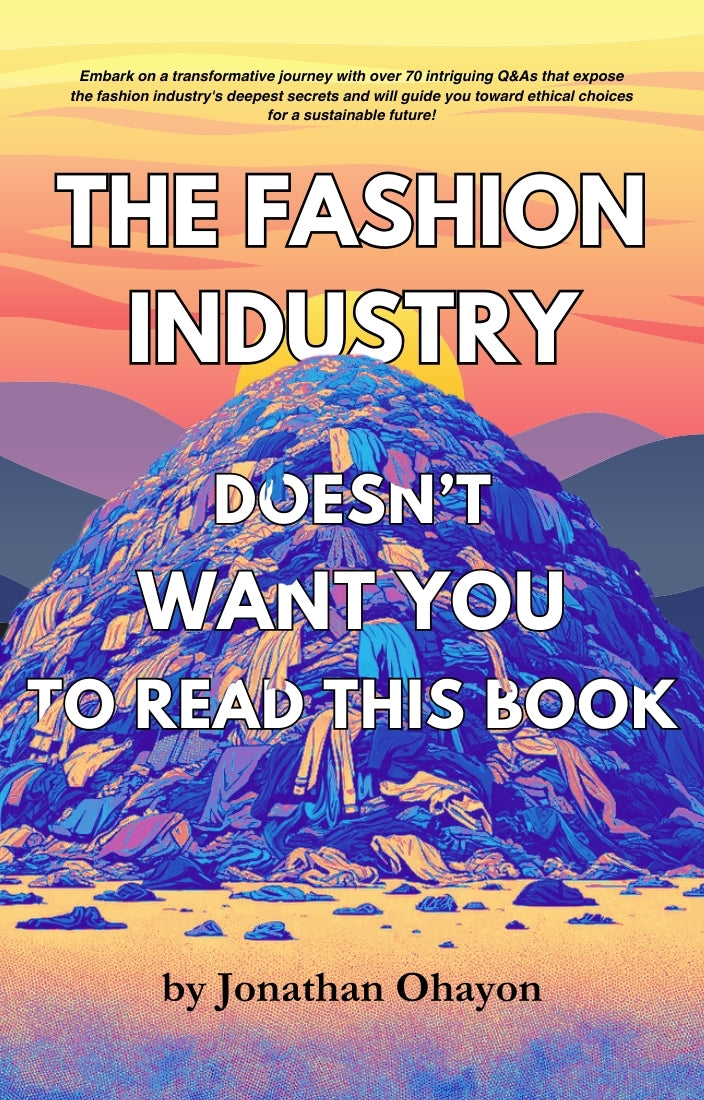
This is exactly the kind of tension I dig into in The Fashion Industry Doesn't Want You To Read This Book, the industry is brilliant at making each individual choice feel isolated and harmless, when really our choices add up into culture, and culture shapes demand.

So Where Does That Leave a Vegan-First Shopper?
Here's the actual reasoning process, not a verdict handed down from above:
- Get clear on your 'why.' If your veganism is purely about not funding new animal suffering, secondhand clears that bar cleanly. If it's also about environmental and cultural impact, the demand argument matters more to you.
- Consider the item's story. A fur coat inherited from your grandmother that's been sitting in a closet for 40 years is a very different moral object than a shearling boot you're hunting down fresh on a resale app this season, still riding this year's trend cycle.
- Think about visibility. Wearing an old leather belt privately is not the same signal as posting a 'thrifted fur haul' that glamorizes the material to thousands of people.
- Check what exists today. Materials have moved fast. The Material Innovation Initiative's database tracks dozens of next-gen alternatives, from mycelium leather to apple-based leather, that simply didn't exist when that vintage jacket was made.
- Accept there's no universal answer. You get to draw your own honest line, and you're allowed to move that line as you learn more.
FACT — Secondhand leather doesn't create new suffering, but it can quietly normalize a market that does. Reuse what already exists; choose differently going forward.
What You Can Actually Do About It
- If you already own leather, fur, or wool pieces, wear them until they're truly worn out rather than tossing them for a 'purer' wardrobe overnight.
- When thrifting, actively look for non-animal fabrics first: cotton, linen, hemp, and the growing range of vegan-leather finds in secondhand racks.
- When you do buy new, choose designers built around cruelty-free materials, easy to find among the ethical brands on Shop Like You Give a Damn.
- Donate animal-material pieces you're done with instead of throwing them away, keep them circulating rather than adding to landfill.
- Support the brands innovating with next-gen materials; every purchase there is a vote for what the industry builds more of next.
FAQ
Is buying secondhand leather better than buying new?
Environmentally, yes, you're extending the life of an item that already exists rather than commissioning new production. Ethically, it's more nuanced: no new animal was harmed for that specific purchase, but wearing and normalizing the material can still support cultural demand for it.
Does thrifting fur or wool still support animal cruelty?
Not directly, the specific animal involved was already harmed before your purchase. The concern is indirect: keeping these materials visible and desirable in the secondhand market can help sustain their status as acceptable choices, which touches broader demand.
Should vegans avoid secondhand animal-material clothing entirely?
Some vegans do, on principle, to fully disengage from the aesthetic and market for animal materials. Others accept secondhand as a genuine harm-reduction and anti-waste choice. Both positions come from the same core value: reducing harm, applied with a slightly different focus.
What should I do with leather or fur I already own?
Wear it out fully rather than discarding it, which would waste the resource for nothing. When you're ready to let it go, donate it so it stays in circulation, and replace it with a vegan alternative when the time comes.
This gray zone doesn't have a tidy final answer, and that's okay. The fact that you're even asking the question puts you ahead of most shoppers who never think about it at all. If you want to go deeper into the reasoning behind leather, wool, and fur, I unpack it further in the N1 best seller The Fashion Industry Doesn't Want You To Read This Book, available on Amazon. And whenever you're ready to buy new, Shop Like You Give a Damn is full of designers already doing it the cruelty-free way.
You are a superhero, and your superpower is choice. Choose wisely.
Sources
- A New Textiles Economy: Redesigning Fashion's Future — Ellen MacArthur Foundation, 2017
- Textiles: Material-Specific Data — US EPA, 2018
- Mind What You Wear: The Psychology of Fashion — Prof. Karen Pine, 2014
- Material Innovation Initiative — Next-Gen Materials Database